

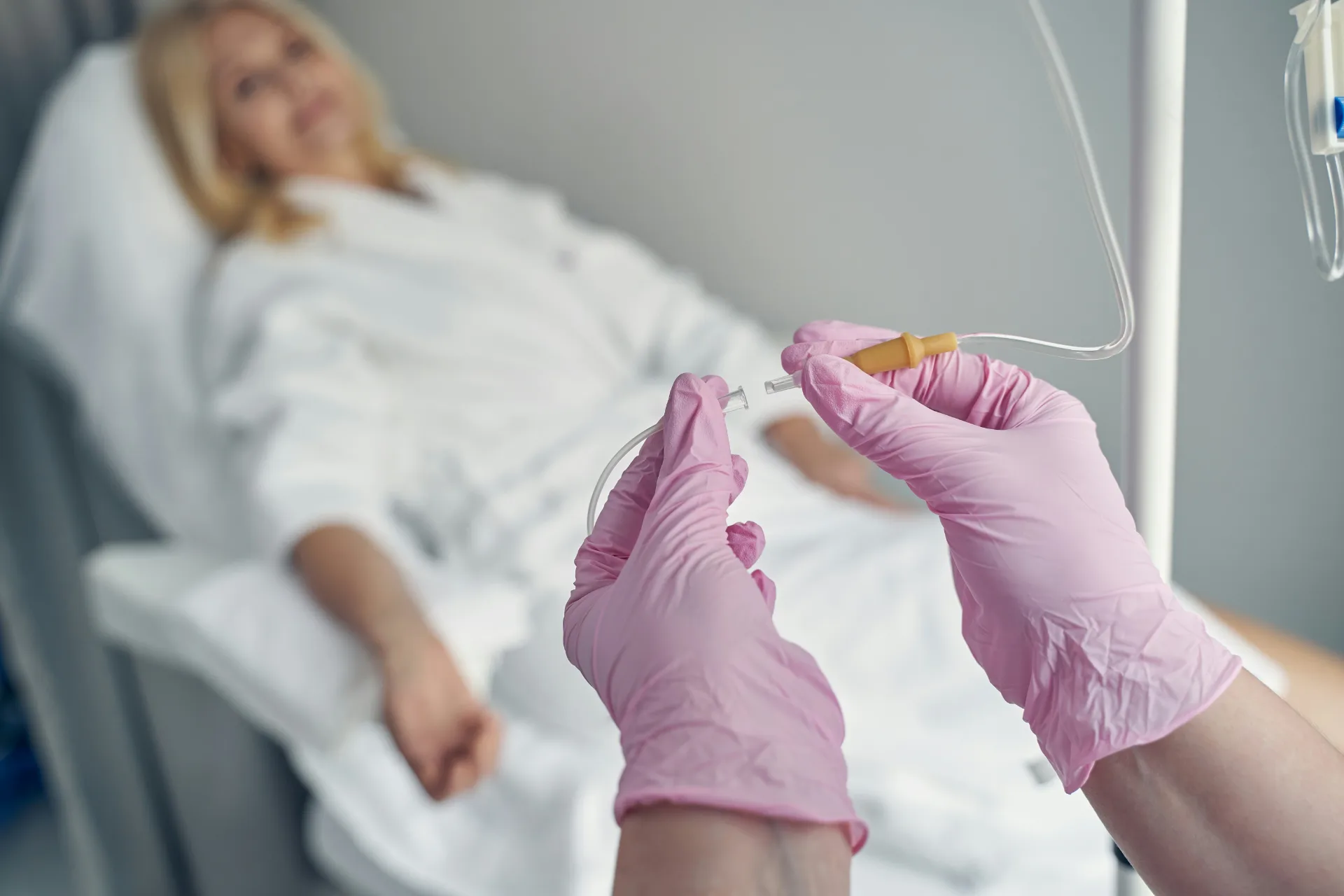
An IV delivers fluid and nutrients straight into your bloodstream, bypassing the gut entirely. That matters when absorption is the problem — after illness, heavy training, travel or a stretch of poor intake. It is genuinely useful for hydration and correcting deficiency. It is not a treatment for disease, and we will not sell it to you as one.
Setting expectations
What an IV Does, and What It Doesn't
This corner of wellness is heavily oversold, so here is the useful version.
What it genuinely does
Rehydrates you quickly. A litre of fluid into a vein works faster than a litre you have to drink while feeling awful, and most of what people describe as feeling better afterwards is this.
Bypasses the gut. If you are vomiting, not absorbing well, or on a medication that blunts intake, oral supplements are fighting a losing battle. An IV is not.
Corrects a real deficiency faster. Where bloodwork shows you are genuinely low in something, this gets you there sooner.
What it does not do
It does not treat or cure illness. It does not detoxify you — your liver and kidneys do that, continuously, and they do not need help from a bag. And if you are well-hydrated and eating properly, most of what is in the bag leaves in your urine within hours.
Most importantly: if you are exhausted every week, an IV is the wrong answer. Persistent fatigue deserves bloodwork, not a standing appointment. Thyroid, iron, B12, vitamin D and hormones are where that usually lives, and we would rather find it than sell you a drip every fortnight.

Choosing
Drip, Injection or Tablet?
All three get nutrients in. They differ in how much, how fast, and how much of your day it costs.
| IV drip | Injection | Oral supplement | |
|---|---|---|---|
| Absorption | Complete, immediate | Complete, bypasses the gut | Variable, gut dependent |
| Time with us | 30–60 minutes | About 15 minutes | None |
| Includes fluid | Yes, a full litre | No | No |
| Best for | Dehydration, illness, several nutrients at once | A single nutrient, repeated regularly | Daily maintenance |
| Needs a provider | Yes | Yes | No |

What to expect
Your Appointment
- First visitA proper evaluation, because North Carolina requires a provider order for infusion and because we want to know your history before putting a line in.
- The cannulaThe only uncomfortable part, and it lasts a second or two. Same as giving blood.
- The dripThirty to sixty minutes in a chair. Bring something to read. Many people feel the fluid as a coolness up the arm, which is normal.
- AfterwardsNo downtime. Straight back to your day. Some people feel a lift within the hour, some by the next morning.
Tell us about kidney or heart conditions. A litre of fluid is not trivial for everyone, and that is exactly what the evaluation is for.
Before you book
Questions We Get Asked Most
Does IV therapy actually work?
For hydration and for correcting a measured deficiency, yes — it delivers fluid and nutrients straight into the bloodstream and bypasses the gut entirely. It does not treat or cure illness, and it does not detoxify you; your liver and kidneys do that continuously. If you are well hydrated and eating properly, much of what is in the bag leaves in your urine.
How long does an IV drip take?
Thirty to sixty minutes depending on the blend and the volume. A vitamin injection takes about fifteen minutes including the appointment around it.
Is IV therapy good for a hangover?
It rehydrates you quickly, which is the main reason people feel better. That is a real effect and a modest one — it is fluid and nutrients, not a cure, and it does not undo what alcohol did to your sleep.
Do I need a consultation before IV therapy?
Yes. North Carolina requires a provider order for infusion, and we want your history first — kidney and heart conditions in particular change whether a litre of fluid is appropriate for you.
How often should I have an IV?
For most people, occasionally rather than on a schedule — after illness, travel, or a hard training block. If you feel you need one every fortnight, that is a signal to investigate why rather than to book a standing appointment.
Is a drip better than taking supplements?
Not generally, for a healthy person eating well. It is better when absorption is the problem, when you are dehydrated, or when bloodwork shows a genuine deficiency you want corrected faster.
Does it hurt?
Only the cannula going in, and only for a second or two — the same as giving blood. The drip itself is painless, though many people notice a coolness travelling up the arm.

Ready when you are
Start Today
IV therapy needs a provider evaluation first, as North Carolina requires for infusion. Payment collects when you book, your consent and intake go out automatically, and after that first visit drips can be booked directly.