

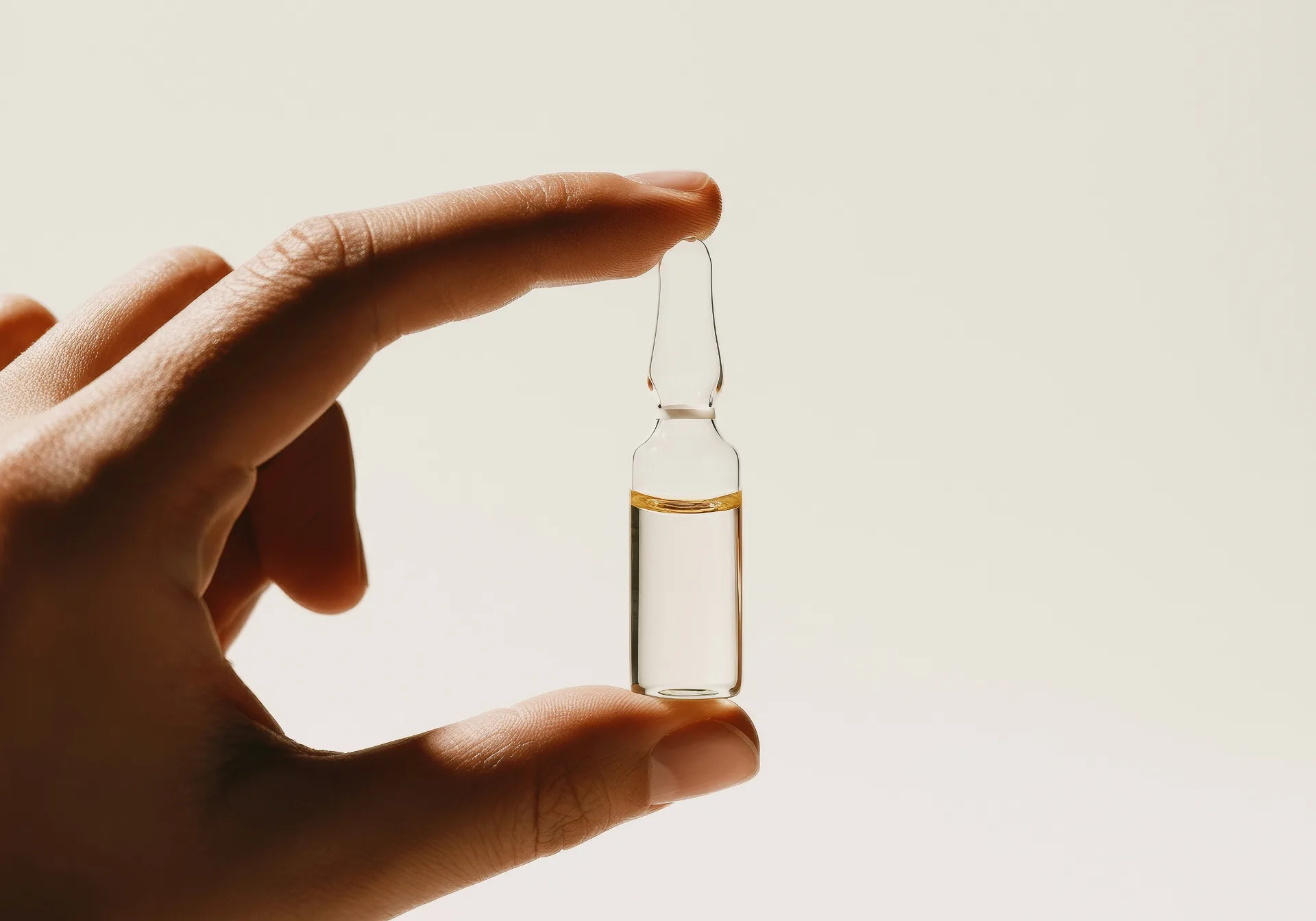
Glutathione is the body's master antioxidant — made inside every cell, and depleted by age, illness, alcohol and sustained stress. An injection delivers it directly into muscle or bloodstream, bypassing the gut, where oral glutathione is largely broken down before it can be absorbed. Most people come to us for brighter-looking skin, easier recovery, and feeling less run down.
Start here
What Does Glutathione Actually Do?
Worth understanding before you decide whether it is worth your money.
Glutathione is a small protein your body builds from three amino acids. It is not exotic and it is not new — it has been in every cell you own since the day you were born, doing three jobs.
It neutralises free radicals, the unstable molecules produced by normal metabolism, sun exposure, pollution and inflammation. It supports the liver's clearance pathways, binding to compounds the body wants to get rid of so they can be excreted. And it helps regulate immune cells, which is part of why people feel worse when their levels drop.
Levels fall steadily with age. They fall faster with illness, heavy drinking, chronic stress, poor sleep and significant sun exposure. That decline is the reason people look for a way to put it back.
Why people come in
What We Hear Most
- Dull SkinSkin that looks tired and flat rather than lit from within
- Uneven TonePatchiness and sun-related discolouration across the face
- Low EnergyFeeling run down without an obvious medical cause
- Slow RecoveryTaking longer than usual to bounce back from illness or training
- Poor AbsorptionHaving taken oral glutathione for months with nothing to show for it
- Alongside IV TherapyAdded to a drip as part of a wider wellness plan
Being straight with you
What the Evidence Supports — and What It Doesn't
This is the section most clinic websites leave out. We would rather you booked knowing exactly where the line is.
The part that is well established
Glutathione's role in antioxidant defence, liver clearance and immune regulation is basic physiology, not marketing. So is the absorption problem: swallowed glutathione is broken down substantially in the digestive tract, which is why injection and infusion exist at all.
The part that is not
Clinical evidence that glutathione injections change skin tone is limited. The studies that exist are mostly small and short. Glutathione is not approved by the FDA as a skin-lightening treatment, and the FDA has issued a consumer warning about injectable skin-lightening products sold outside proper medical channels.
So we will not promise you a shade change, and we will not sell it to you as skin whitening. What patients consistently report is skin that looks brighter and more even, and feeling better in themselves. That is a real and reasonable thing to want. It is simply not the same claim.
How we handle it here. Glutathione is compounded by a licensed pharmacy, dosed by a nurse practitioner, and administered in a clinical setting with your history on file. The FDA's concern is with unregulated product and untrained administration — which is exactly what a medical practice is for.
Choosing a route
Injection, IV Drip, or Capsule?
All three deliver glutathione. They do not deliver it equally, and they do not suit the same person.
| Injection | IV infusion | Oral capsule | |
|---|---|---|---|
| Absorption | Bypasses the gut entirely | Bypasses the gut entirely | Largely broken down before absorption |
| Time with us | About 15 minutes | 30–60 minutes | None |
| Typical use | A regular, repeatable top-up | A larger dose, usually alongside other nutrients | Daily maintenance |
| Best when | You want it quick and want to keep it up | You want a bigger dose, or fluids too | Cost comes first and lower absorption is acceptable |
| Needs a provider | Yes | Yes | No |

What to expect
Your Appointment
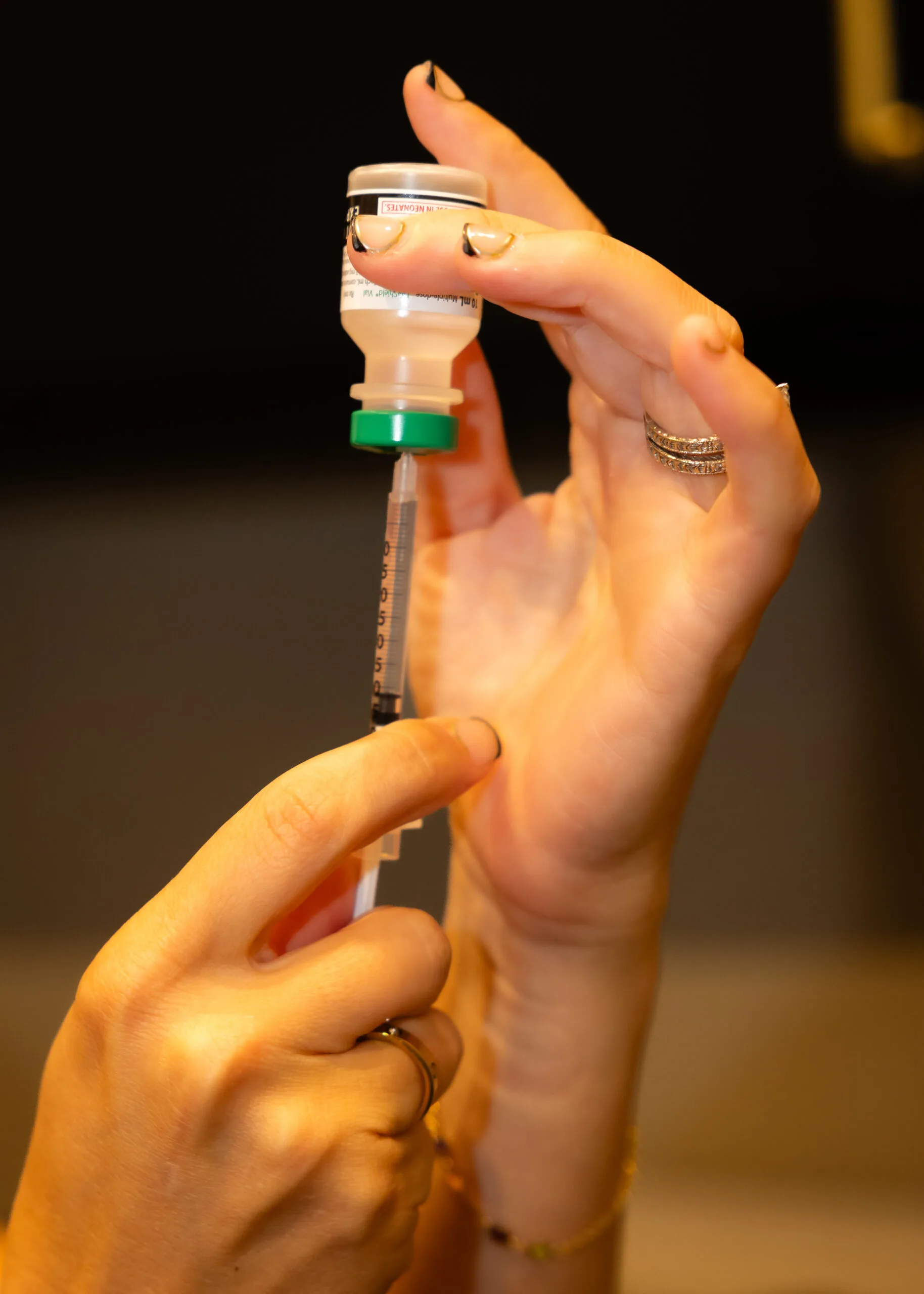
The injection itself takes under a minute. It goes into the upper arm or the gluteal muscle, and the needle is a fine one — most people describe a brief sting and nothing after it.
Your first visit is longer, because it is a proper appointment rather than a walk-up. We go through your history, your medications, what you are hoping for and whether glutathione is a sensible thing for you specifically. North Carolina requires a provider evaluation before any injectable treatment, and we would want to do one regardless.
After that first visit, top-ups are quick. Fifteen minutes in the building, no downtime, nothing to plan around. People come in on a lunch break.
The plan
How Often
Glutathione is not a one-off. It is something you keep topped up or you do not bother.
- First visitEvaluation, history and your first injection if you are a good candidate.
- Weeks 1–4Often weekly or fortnightly at the start, depending on where you began and what you are addressing.
- OngoingMost people settle into every two to four weeks. Some pair it with a monthly IV instead.
- If nothing changesWe will tell you. If you have given it a fair run and feel no different, continuing is a waste of your money and we will say so.
On timelines: this is not a treatment with a dramatic before-and-after moment. Patients who notice a difference usually describe it building over several weeks — which is also why we ask you to commit to a run rather than judging it on one injection.
Before you book
Questions We Get Asked Most
What do glutathione injections do?
They replace an antioxidant your body makes naturally and loses with age and stress. Glutathione supports antioxidant defence, the liver's clearance pathways and immune regulation. Injection is used because swallowed glutathione is largely broken down in the gut before it can be absorbed.
Do glutathione injections lighten your skin?
We will not promise that. Glutathione is not FDA-approved as a skin-lightening treatment and the clinical evidence for tone change is limited and based on small, short studies. What patients commonly report is skin that looks brighter and more even. That is a genuine outcome, but it is a different claim from lightening, and we would rather be clear than sell you something we cannot stand behind.
Are glutathione injections safe?
Administered properly, glutathione is generally well tolerated. The FDA's warning about injectable skin-lightening products concerns unregulated product and untrained administration — not glutathione given by a licensed provider using pharmacy-compounded medication with your medical history on file. Your evaluation exists to catch the reasons you might be an exception.
How long until I notice anything?
Most people who respond describe it building over several weeks rather than arriving after one injection. If you have given it a fair run and feel no different, we will tell you so instead of booking you in again.
How often should I get a glutathione injection?
Often weekly or fortnightly at first, settling to every two to four weeks for maintenance. It depends on where you started and what you are trying to address, which is part of what the first appointment is for.
Is an injection better than an IV?
Neither is better in general. An injection is quicker and easier to repeat; an IV delivers a larger dose and can be combined with fluids and other nutrients in one sitting. Plenty of patients do injections routinely and an IV occasionally.
Do I need an appointment first, or can I just come in?
You need an appointment first. North Carolina requires a provider evaluation before injectable treatment, so your first visit includes a proper history with a nurse practitioner. After that, top-ups can be booked directly and take about fifteen minutes.
Ready when you are
Start Today
New patients start with a visit, because North Carolina requires a provider evaluation before any injectable treatment. Payment collects when you book, your consent and intake go out automatically, and everything lives in one record. After that first visit, top-ups take fifteen minutes.