

Home/Aesthetics/PRP Hair Restoration
PRP for Hair Loss in Dunn, North Carolina
PRP uses platelets concentrated from your own blood, injected into the scalp to stimulate follicles that are thinning but not yet gone. It works best on early loss, in men and women. Before recommending it, we look for a treatable cause — thyroid, iron, hormones — because some hair loss is reversible without injections at all.
What happens first
Before We Sell You Anything, Why Is It Happening?
This is the step most clinics skip, and skipping it is how people spend a thousand dollars treating the wrong problem.
Hair loss has a long list of causes and only some of them are genetic. Low ferritin. Thyroid dysfunction. Vitamin D deficiency. Hormonal shifts after a baby, or through perimenopause. Significant stress or illness a few months earlier. Certain medications.
Several of those are reversible, and treating the cause works better than treating the symptom. PRP will not fix an iron deficiency, and if that is what is driving your shedding, a course of injections is money you did not need to spend.
So your first appointment is an evaluation, not a treatment. We take a proper history, look at the pattern of loss, and order bloodwork where it is warranted. Because this practice also runs hormone and thyroid care, we can act on what comes back rather than sending you elsewhere with a printout.
Sometimes the answer is that you do not need us. That is a perfectly good outcome, and we would rather give it to you than sell you a package.
The treatment
What Is PRP, and What Does It Do at the Scalp?
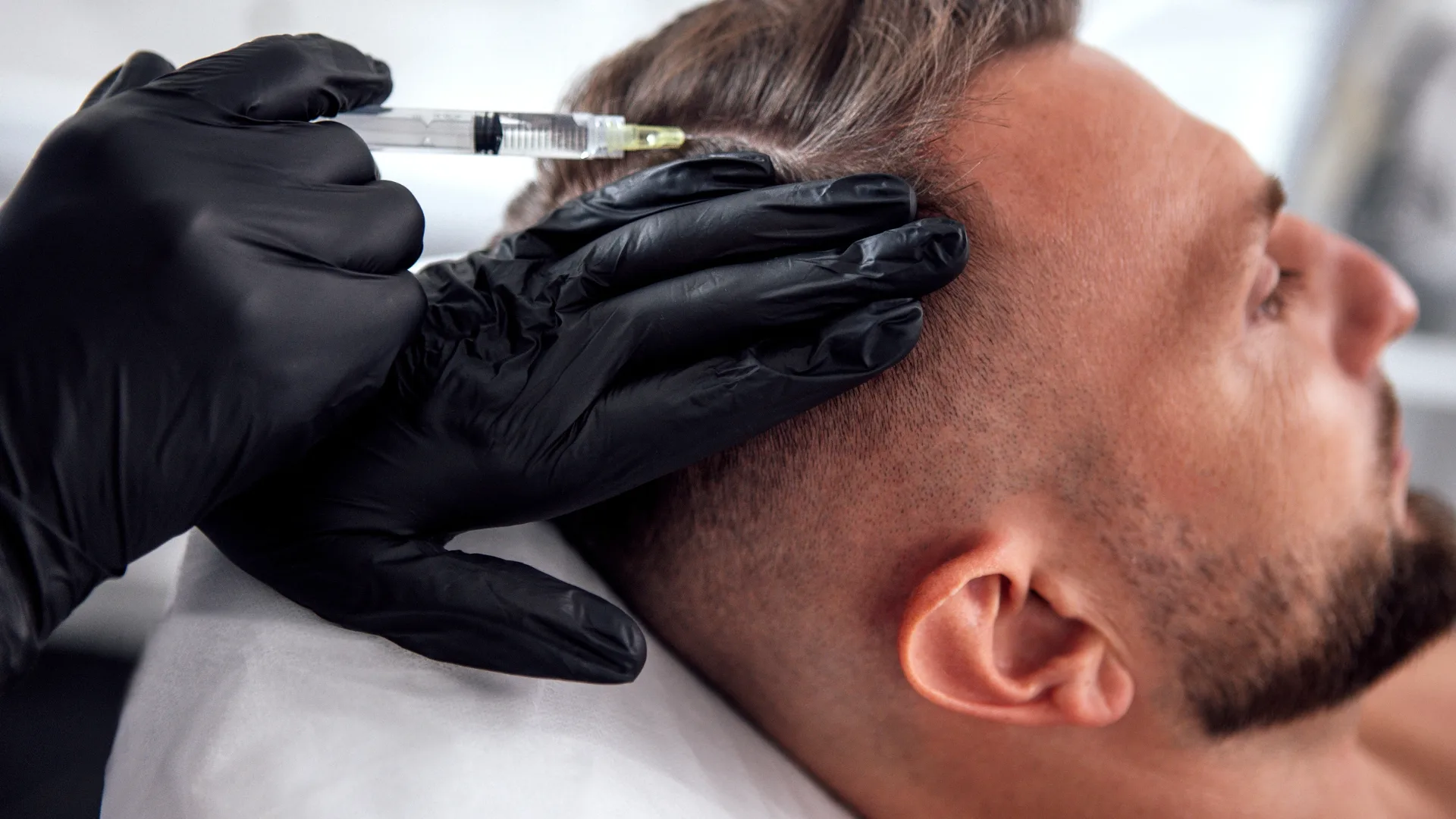
PRP is platelet-rich plasma. We take a small draw of your blood and spin it in a centrifuge, which separates out the layer densest in platelets.
Platelets carry growth factors — the signalling molecules your body uses to coordinate repair and to maintain blood supply to tissue. Injected into the scalp at the level of the follicle, the aim is to improve that blood supply and prolong the growth phase of follicles that are miniaturising.
The key word is miniaturising. In pattern hair loss, follicles do not vanish overnight; they shrink over years, producing finer and shorter hairs until they stop. PRP works on follicles that are still in that process. It does nothing for a follicle that is already gone, which is why timing matters so much more here than with most treatments.
Because the plasma is yours, there is nothing foreign to react to.
Being straight with you
Does PRP Actually Work for Hair Loss?
A fair question, and one that deserves a better answer than "yes, book now".
What the research shows
The evidence for PRP in pattern hair loss is reasonably good and still developing. Several systematic reviews and meta-analyses of randomised trials have found increases in hair density and thickness compared with placebo, and there is evidence it adds to the effect of topical minoxidil rather than duplicating it.
The honest caveat is that trial protocols vary a great deal — how the plasma is prepared, how much is injected, how often — so results across studies are not perfectly consistent.
What it is not
PRP is used off-label for hair loss. It is not an FDA-approved treatment for the indication, and any clinic implying otherwise is overstating it. Off-label is ordinary and lawful in medicine; it simply means you should hear it said plainly rather than discover it later.
It is also not a cure, not permanent, and not a replacement for a transplant where the hair is genuinely gone.
Candidacy
Who It Helps, and Who It Won't
- Early ThinningBest results, by a distance. Do not wait for it to get worse
- Widening PartThe usual first sign in women
- Crown & TemplesEarly male pattern loss before the scalp shows through
- Post-Partum SheddingAlongside checking iron and thyroid
- Perimenopausal ThinningOften better addressed with hormones as well
- Not: Bald AreasWhere the follicle is gone, PRP has nothing to stimulate
The wider picture
PRP, Minoxidil, Prescription or Transplant?
These are not competitors so much as different rungs. Most good plans use more than one.
| PRP | Topical minoxidil | Oral prescription | Transplant | |
|---|---|---|---|---|
| Best for | Early thinning, still-living follicles | Early to moderate thinning | Male pattern loss, some female use | Areas already bald |
| Effort | A few visits a year | Daily, indefinitely | Daily, indefinitely | One surgical procedure |
| Time to see it | 3–6 months | 4–6 months | 3–6 months | 6–12 months |
| If you stop | Gradual return to baseline | Gradual return to baseline | Gradual return to baseline | Grafts stay |
| Available here | Yes | Yes | Discussed at consultation | No — we refer |
We do not perform transplants, and if that is what you need we will tell you and point you to someone who does. Selling PRP to somebody who needs surgery helps nobody.
The schedule
How Many Sessions, and When Will I See It?
- EvaluationHistory, pattern assessment, bloodwork where warranted. Baseline photographs under fixed lighting.
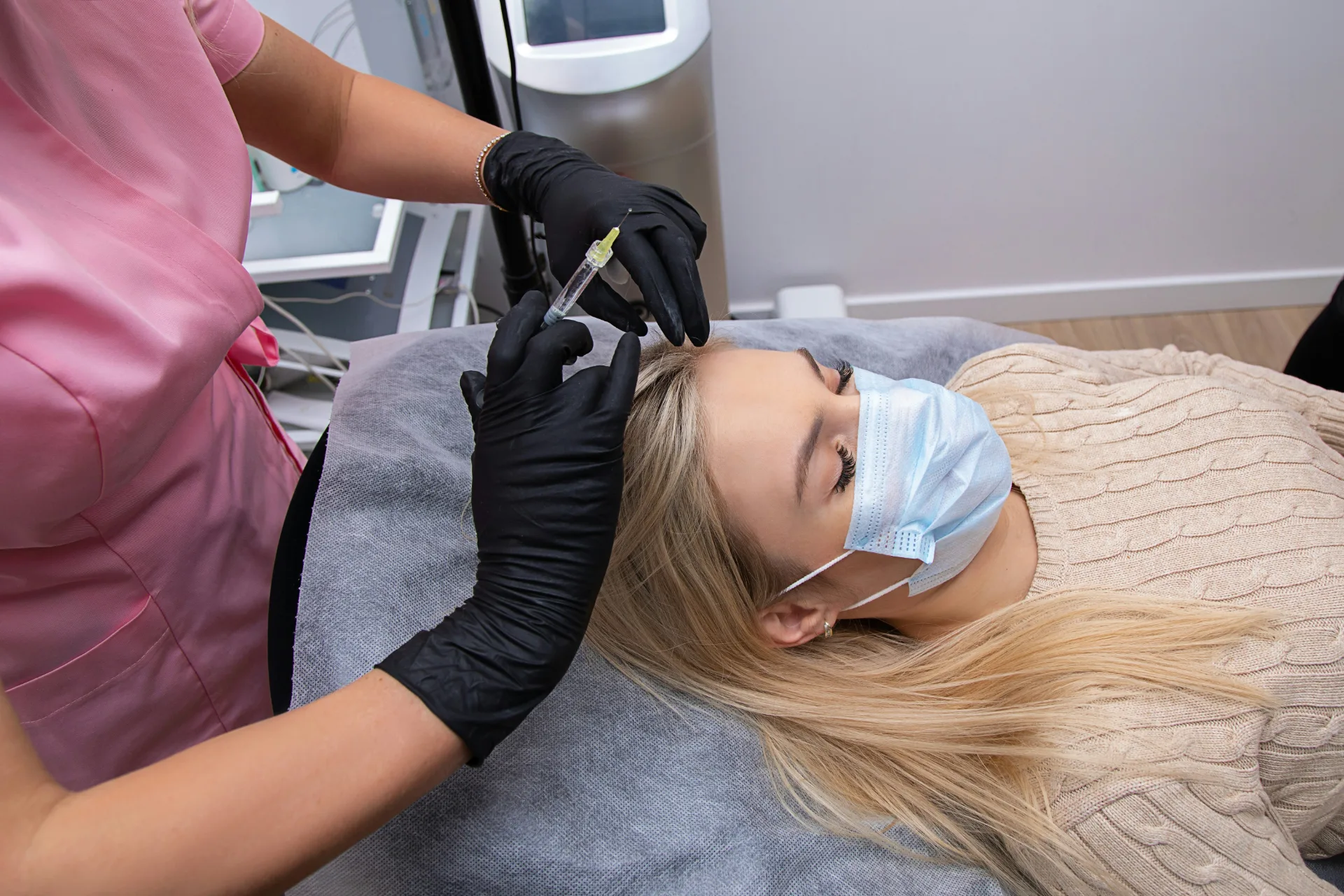
- Months 1–3Three sessions about a month apart. Each takes around an hour including the draw and numbing.
- Months 3–6Shedding often settles first, before any regrowth is visible. This is normal and it is the earliest good sign.
- Month 6Repeat photographs. This is where we compare honestly and decide whether to continue.
- MaintenanceUsually every four to six months. PRP holds ground rather than winning it permanently.
The photographs matter more here than anywhere else on this site. Hair changes too slowly for memory to judge, and every patient we have ever treated has underestimated their own progress at three months and overestimated their loss before starting.
Worth saying
Hair Loss in Women Is Not a Smaller Version of the Same Thing

Women are routinely told their hair loss is normal, stress-related, or simply not worth investigating. Meanwhile the loss keeps going, and by the time somebody takes it seriously there is less to work with.
Female pattern loss usually shows first as a widening part rather than a receding line, and it is frequently tangled up with ferritin, thyroid function, and the hormonal changes of postpartum and perimenopause.
That is exactly the overlap this practice sits in. We treat hormones and thyroid on the wellness side and PRP on the aesthetics side, which means the investigation and the treatment happen in one place, in one record, with one person who knows your history.
Before you book
Questions We Get Asked Most
Does PRP actually work for hair loss?
The evidence is reasonably good and still developing. Systematic reviews of randomised trials have found increases in hair density and thickness against placebo, and evidence that PRP adds to topical minoxidil rather than duplicating it. Protocols vary between studies, so results are not perfectly consistent. It works on follicles that are thinning, not on areas already bald.
Is PRP FDA-approved for hair loss?
No. PRP is used off-label for hair loss. Off-label use is ordinary and lawful in medicine, but you should hear it said plainly rather than find out later, and any clinic implying FDA approval for this use is overstating it.
How many PRP sessions will I need?
Three sessions about a month apart to begin, then maintenance every four to six months. We photograph at baseline and at six months and make an honest comparison before continuing.
How long before I see results from PRP?
Reduced shedding usually comes first, often within three months, before any visible regrowth. Density changes are typically assessed at six months. Anyone promising a visible difference in weeks is not describing how hair grows.
Does PRP for hair hurt?
The scalp is sensitive, so we use topical numbing and, where needed, a cold air device. Most people describe pressure and brief stinging. The appointment takes about an hour including the blood draw and numbing time.
Will you check why my hair is falling out?
Yes, and that comes first. Low ferritin, thyroid dysfunction, vitamin D deficiency, postpartum and perimenopausal hormone shifts, stress and certain medications all cause hair loss, and several are reversible. We order bloodwork where warranted and treat what we find rather than injecting past it.
Can PRP regrow hair where I am already bald?
No. Where the follicle is gone there is nothing left to stimulate. PRP works on follicles that are miniaturising but still alive, which is why acting early matters more here than with most treatments. If a transplant is what you need, we will say so and refer you.
What happens if I stop PRP?
Results gradually return toward your baseline, as they do with minoxidil and oral prescriptions. PRP holds ground rather than winning it permanently, which is why maintenance sessions are part of the plan rather than an upsell.
Ready when you are
Start Today
Hair loss starts with an evaluation rather than an injection, because finding a reversible cause changes the plan entirely. Payment collects when you book, your consent and intake go out automatically, and your bloodwork, photographs and treatment all live in one record.